Nature Trails
Understanding the Lagoon Ecosystem: Salt Marshes, Mudflats, and Birdlife Explained
A lagoon is a place that keeps changing its mind. At dawn the water may be pressed up against the reedbeds; six hours later the same spot is a shining plain of mud with birds walking across it. Visitors often ask what they should be looking at, as though the answer were a single viewpoint or a single species. It is not. The interest of a lagoon lies in the way its habitats sit next to each other and hand the work back and forth with every tide.
A Mosaic, Not a Single Habitat
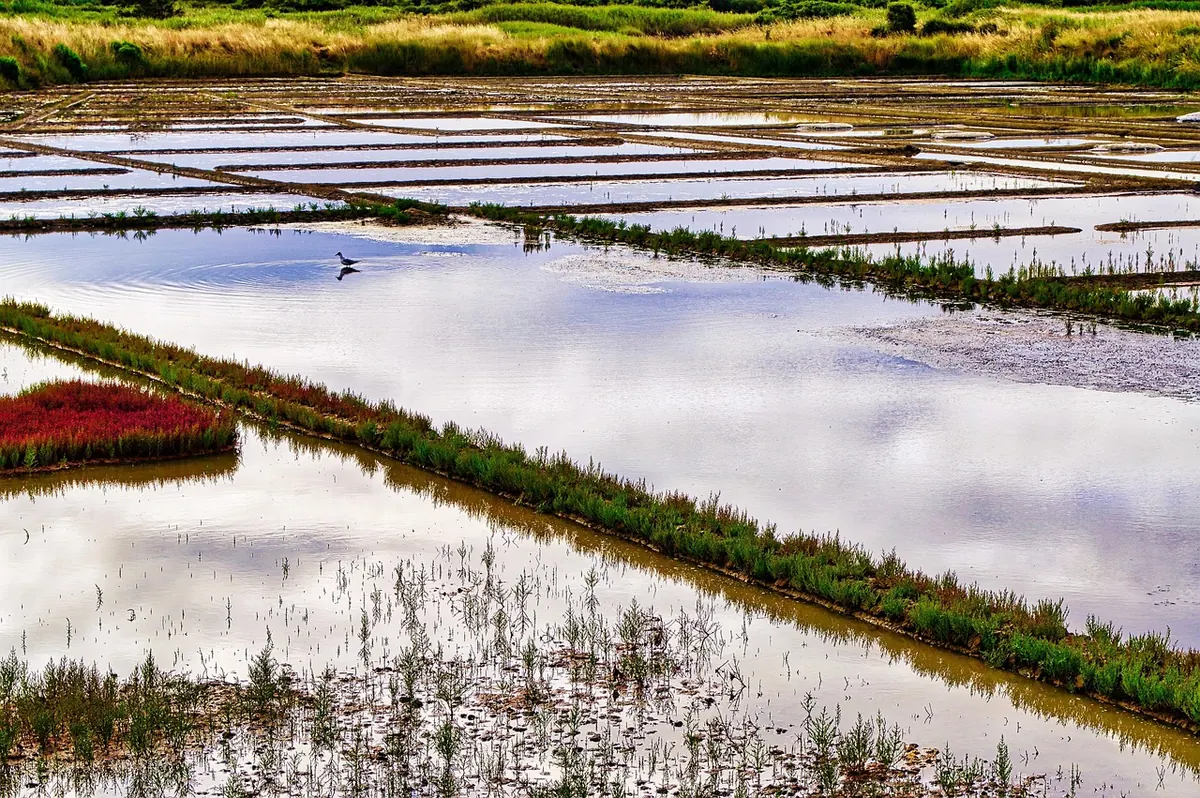
From a trail you are usually looking across three things at once. The first is salt marsh — the raised, vegetated platforms that are flooded only by the higher tides; in the northern Adriatic these are called barene. The second is mudflat, the bare sediment that appears at low water and disappears again, known locally as velme. The third is the network of channels and shallow open water that carries the tide in and out and never quite dries.
Around these sit reedbeds, sandbars, barrier islands and the occasional stretch of shingle or shell. Each edge matters. A channel bank is not the same habitat as the mud twenty metres away, and the birds know it even if the view looks uniform to us.
Salt Marshes: Land Built by Plants
Salt marsh looks soft and unremarkable from a distance and turns out to be one of the most engineered landscapes in the lagoon — engineered by plants. Species such as glasswort, sea lavender, sea purslane and cordgrass have evolved to tolerate salt, survive waterlogging, and hold on in sediment that shifts underfoot. Glasswort is the one that gives whole marshes their autumn colour, turning from green to deep red before it dies back.
How a marsh grows and shrinks
The mechanism is straightforward. Stems and roots slow the current, sediment settles out of the water, and the surface rises slightly. Once the platform sits a little higher, it drains better and a different plant community takes over. Where currents are too strong, or where boat wakes and dredging cut into the edge, the same sediment is pulled away and the marsh retreats. A marsh edge is therefore never fixed; it is either accreting or eroding, and you can often see which by looking for a low cliff of peat and roots along a channel.
Life here is small but dense: amphipods and isopods in the wet litter, crabs in burrows, snails on the stems. Salt marshes also act as a nursery and a buffer, absorbing wave energy that would otherwise hit the barrier islands and the built edges of the lagoon. They are worth more than they look.
Mudflats: The Larder at Low Tide
When the water pulls back, it leaves behind the lagoon's food supply. A mudflat surface is a film of diatoms and algae over silt and sand, and beneath it lives a crowded community: ragworms and lugworms, small bivalves such as cockles, mud snails, shrimps, and juvenile fish that have come in to feed. This is why so many birds time their day to the tide rather than to the clock.
Watch a feeding flock and you will see that each species works a different layer of the same flat. Curlews push a long, curved bill deep into the mud. Dunlin and other small sandpipers probe the surface. Avocets sweep a slightly upturned bill from side to side through shallow water. Oystercatchers use a straight, chisel-like bill to open shellfish. The mudflat is not one habitat but a stack of them, divided by depth and by how wet the sediment stays.
It is also fragile in a way that is easy to miss. Boot prints in soft mud can persist for weeks, and repeated trampling compacts the surface and pushes out the invertebrates living in the top few centimetres. Staying on marked paths is not a formality here; it is the single most useful thing a visitor can do.
Channels and Shallows
The channels are the lagoon's circulation system. They carry the tide, flush out excess nutrients, and stay deep enough to remain water when everything around them is exposed. Fish move along them with the tide, which is why a heron or a kingfisher will often be found perched over a channel rather than out on the flat.
Where the water is shallow and clear enough, you may find seagrass — eelgrass and, in warmer parts of the Mediterranean, Cymodocea. These underwater meadows stabilise sediment and shelter young fish, and they are a good indicator of water quality: where they decline, something has usually changed in the balance of nutrients and light. From a boat or a raised path, look for dark, soft-edged patches under the surface rather than the sharp outlines of sand.
Birdlife: A Calendar Rather Than a Checklist
The birds change through the year, and that is half the pleasure. Winter brings wildfowl — teal, wigeon, pintail, shelduck — along with grebes, cormorants, grey herons and the white egrets that have become common across many Italian lagoons. Marsh harriers quarter the reedbeds in slow, low flights. In spring and autumn, migration adds waders in numbers, moving through on their way north or south. Summer is quieter on the mud but busy in the reeds, where reed warblers and bearded reedlings nest, and where black-winged stilts and avocets raise chicks on the higher marsh edges. In a few lagoons, spoonbills and flamingos are now regular rather than exceptional.
Let the tide do the work
If you only remember one practical thing, remember this: the rising tide pushes birds towards the shore, and the falling tide spreads them out. A trail walked on a rising tide in the two hours before high water will usually show you more birds, closer, than the same trail at dead low water. Wind matters too — a cold, strong wind flattens activity, while calm mornings after a clear night tend to be good.
How to Watch Without Changing What You See
Most disturbance is unintentional. A group stops to look, raises a phone, steps two metres off the path for a better angle, and a flock lifts. The birds spend energy they needed for feeding or resting.
- Keep to the path, even when the mud looks firm. It usually isn't.
- Stop and let birds settle rather than walking towards a flock. If they lift, you are too close — back off and wait.
- Use the vegetation as a screen and keep your silhouette low where the bank allows it.
- Leave dogs at home on bird-rich stretches, or keep them short-leaded on the main track.
- Skip the drone. Nothing empties a lagoon faster.
- Never feed birds, and take your litter and bait boxes back with you.
Binoculars help, but patience helps more. Find a comfortable spot with a wide view, sit still for fifteen minutes, and the lagoon will start to show you what is happening in it.
Before You Set Out
Check a tide table for the inlet nearest your trail before you choose your walking time; lagoon tides can look modest on paper and still flood a path. Mid-tide on the way in is the sweet spot for both walking and watching. Wear boots you don't mind getting muddy, carry water and sun protection in summer, and take insect repellent for the windless hours around dusk. Bring a layer for the wind even on warm days.
Walk slowly, look at the edges rather than the middle of the view, and give the marsh the respect you would give any working landscape. It is doing a job out there, twice a day, whether or not anyone is watching.
Photo: Roses_Street / Pixabay
Related Articles